
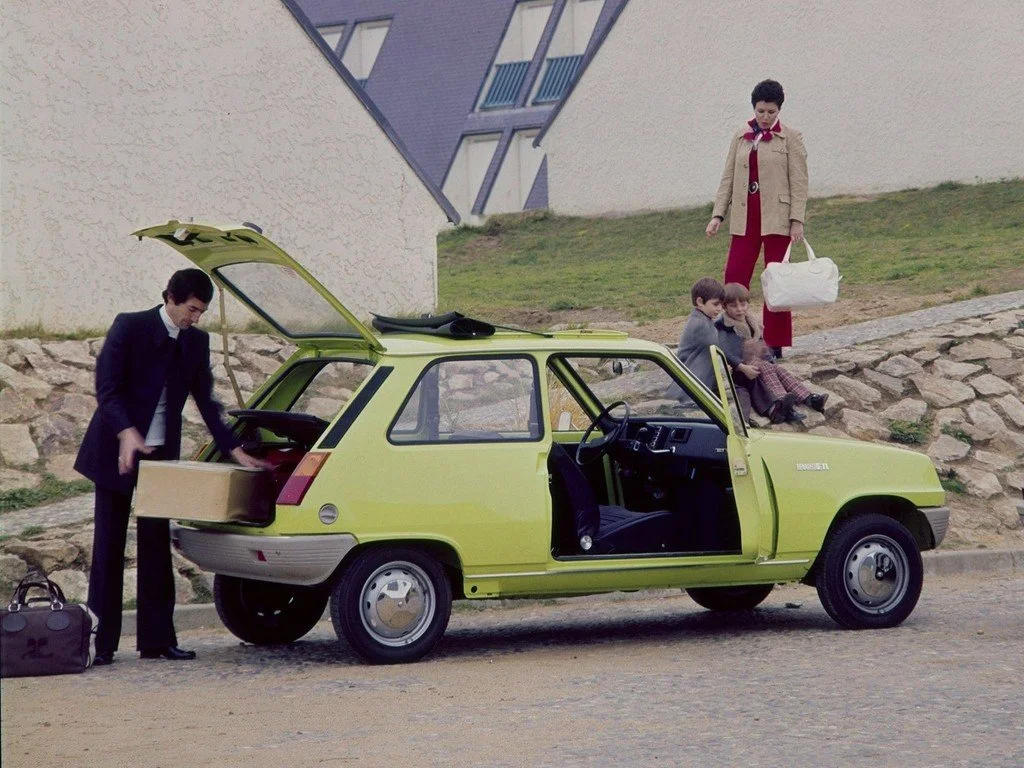
Before I explain how the best new car of 2025 was designed in 1972, I have a confession to make. I originally didn't want to be an architect. I wanted to design cars. But when I was 19 there was no real car design course in Australia and the best course in the world was at the Royal College of Art in London. When I was 19 I'd never been out of Australia and I had neither the money nor the nerve to try and do that course. Instead I studied architecture. Before I finished my architecture degree, I'd started working in interior design and I enjoyed it and focused on workplace design. But I never stopped watching what car designers do. And in 2026 they're wrestling with one of the biggest behaviour-change problems in the world. How do you get people into electric cars they don't yet want?
And what's a 1972 Renault got to do with workplace change? More than I expected when I started writing.
How do you choose a car when they look the same?
With great difficulty and that's the problem. Petrol cars could be mechanically very different: front engine, mid engine, rear engine. Two, three, four, five, six, eight, ten or twelve cylinder engines. The design was very much influenced by the mechanicals. In contrast electric cars are nearly all built one way: a flat rectangular battery pack in the floor, with wheels on each corner. You can understand why the industry calls it a skateboard. It can have a motor at one end or the other, or both, and higher-performance models can even have a motor for each wheel, as the controversial Ferrari Luce does. But before I get distracted by a Ferrari styled by ex-Apple designers Jony Ive and Marc Newson, back to the current state of electric car design.
On top of the skateboard there's a body and the seating position is higher than in a conventional petrol engined car because you have to sit on top of the skateboard battery pack. And in most electric cars there are very few physical controls with an iPad-like instrument panel to control nearly every function. And that distracting iPad like control panel is not there because it's a better way of operating a car. It's there because it's cheaper.
In Australia there's a new Chinese brand building on that formula almost every month and even a car obsessive like me can't pick many of them apart. Most of them are competent and almost none of them are memorable. When everything underneath a fairly generic exterior design is the same, what's left to choose on? Battery range? Maybe warranty... but fundamentally price. A spreadsheet decision. Nothing more.
Luca de Meo, who ran Renault in France until last year, has been blunt about where that road ends. He said he'd never accepted the idea of turning cars into washing machines or another white good, all doing the same job and all looking alike.
Europe's answer: raid the family album
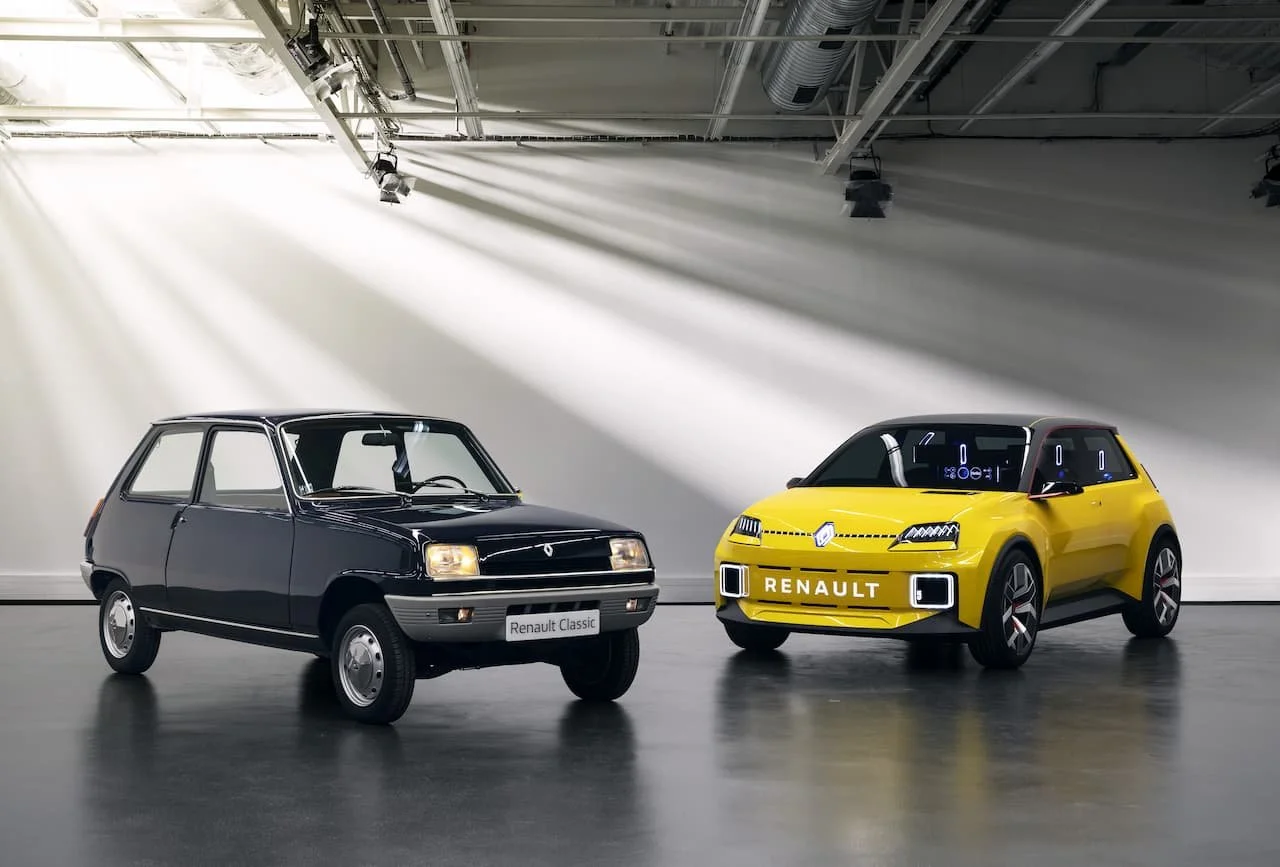
The new Renault 5 E-Tech sits on exactly the same skateboard as everyone else's. But the body on top is unmistakably a new evolution of the original Renault 5 that sold around 5.5 million worldwide between 1972 and 1985. The new one was voted European Car of the Year in 2025 and has waiting lists right across Europe. And it's on its way to Australia. Fiat got there first with the 500e. Renault is also following the 5 with a reborn 4 and Twingo.
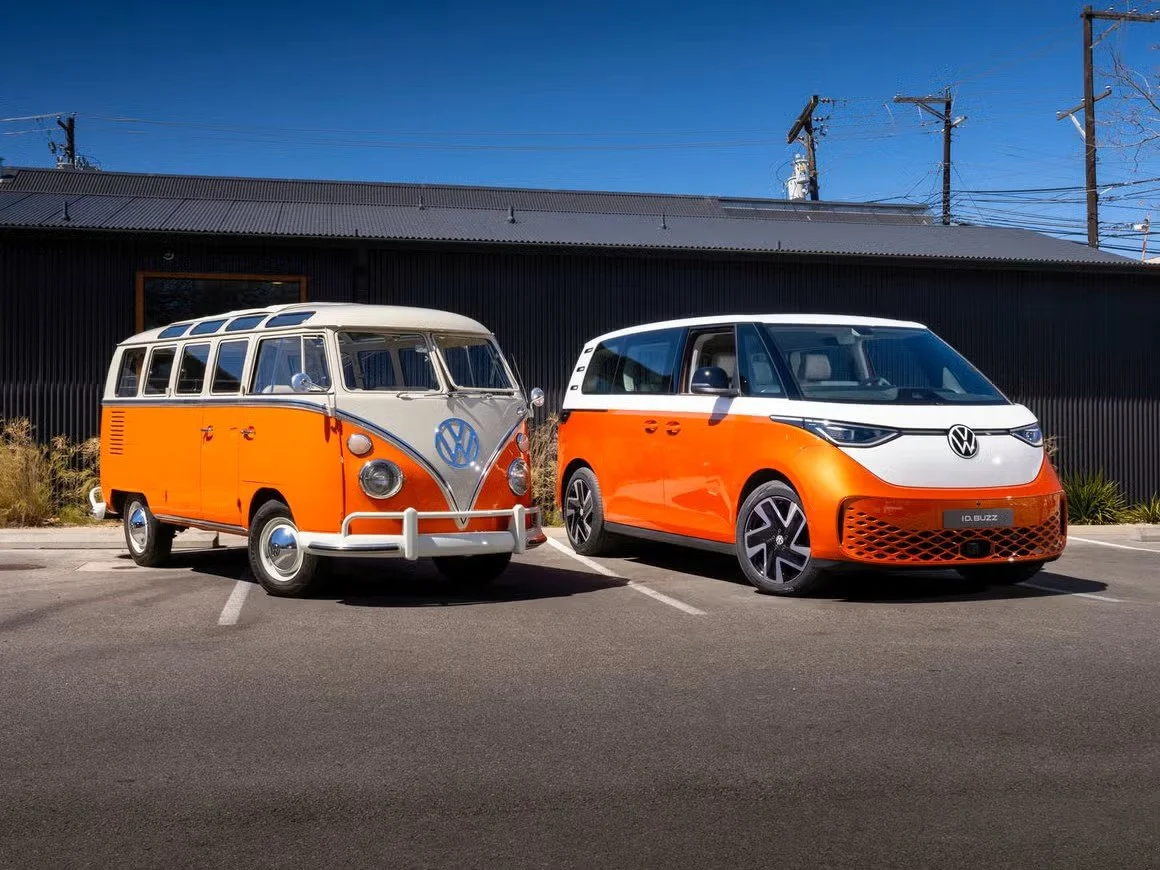
The original VW Kombi launched in 1950, and its successor the 2022 VW ID. Buzz
Volkswagen's ID. Buzz is a Kombi with a battery pack so maybe we'll see those driving around Byron Bay with a waft of marijuana smoke coming out the back... And two weeks ago in Paris, Citroën showed a prototype of a car it hasn't built for over 35 years: the 2CV reborn as an electric car, priced around €15,000 and on sale in 2028, 80 years after the original. So drawing on retro styling is no longer a car maker's quirky fringe offering. Europe's two biggest car groups are running the same strategy.
Luca de Meo explained why the new Renault 5 looks the way it does.
"When you revive certain codes that people are already used to, you immediately lower the barriers."
Luca de Meo, then-CEO, Renault Group.
That is not the car's designer talking about styling. That is the chief executive describing a change strategy. Citroën CEO Xavier Chardon makes the same pitch for the new 2CV: in 1948 it gave mobility to millions, and 80 years on its job is to "democratise electric mobility". Same philosophy, different badge.
Haven't we seen retro design before?
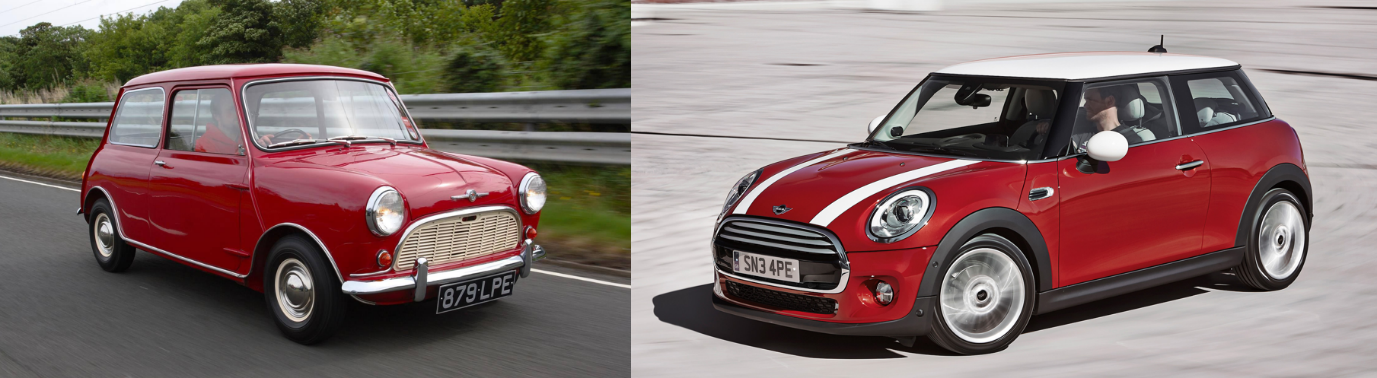
The original Mini launched in 1959, and BMW's redesigned Mini launched in 2001
We have - and the difference now is the whole point. Volkswagen tried it with the new Beetle in 1998 (badly: with a Golf in weirdly proportioned fancy dress) and BMW did it well with the Mini in 2001. But both those cars were quirky, interesting, and expensive sidelines. Image pieces on the periphery of their volume products. And mechanically they weren't selling you anything new. The retro skin was selling continuity: the same car underneath, in fashionable and nostalgic wrapping.
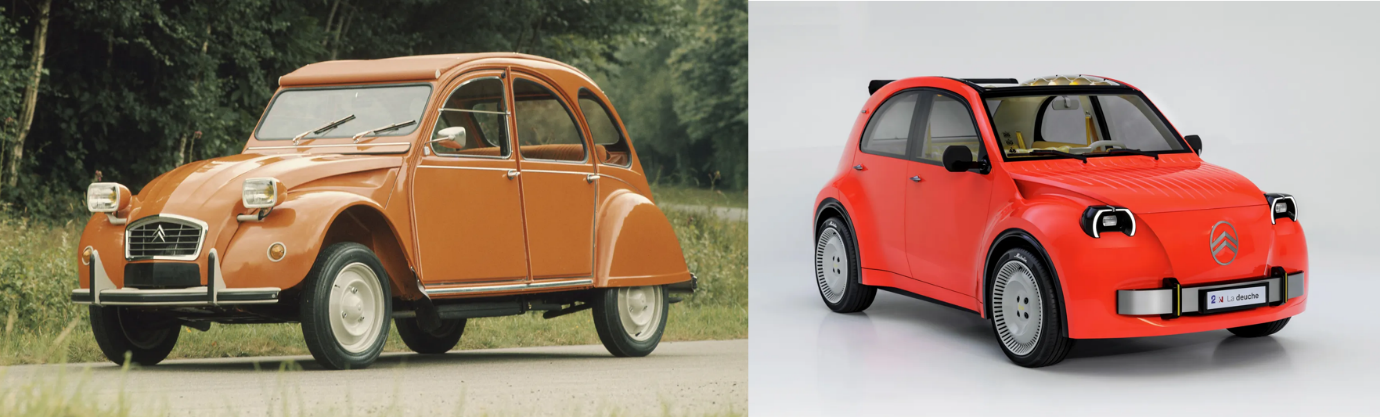
The original Citroen 2CV launched in 1948 (this image is a slightly later version) and the new Citroen 2CV due in 2028
This new wave is a reverse on both counts. The Renault 5 and the Citroën 2CV aren't sidelines. They're intended to be the best-selling cars their makers produce. And unlike earlier retro designs the familiar bodywork is wrapped around a genuinely different machine, with different propulsion and different habits attached. The first retro wave used heritage and fashion to sell sameness. This one is using heritage to sell change. That's a new approach and it's why people running these companies keep talking like change managers.
So does nostalgia sell cars?
Not on its own. At least not in high volumes. The new electric Fiat 500 has struggled in Europe despite being a beautiful execution of the original idea. It's suffering from a high price / poor range equation. Leading Chinese brands aren't standing still and several have hired star European designers, including BYD's design chief, formerly head of design at Audi and Alfa Romeo. You can buy the designer.
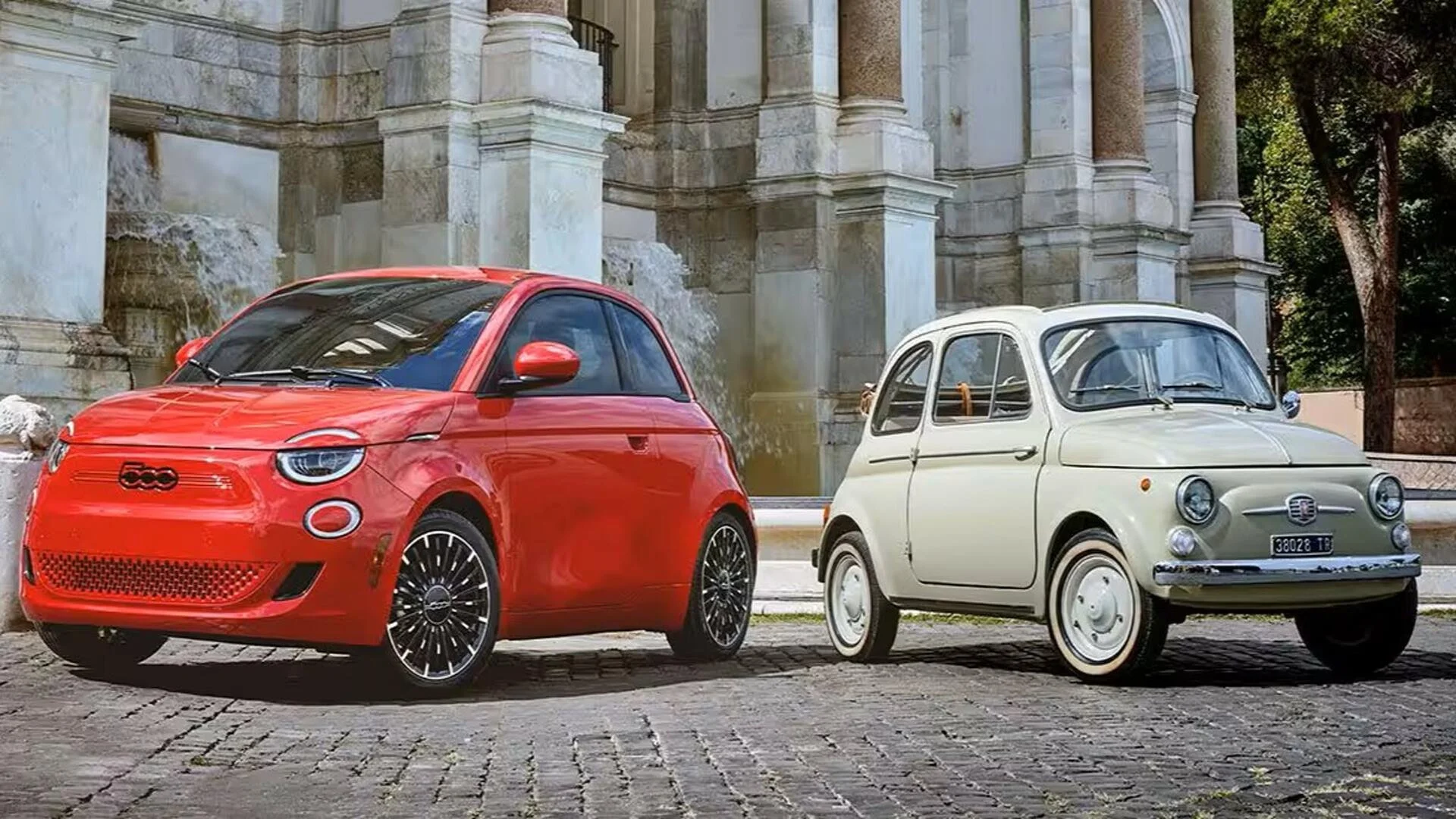
The 2020 Fiat 500E and the original Fiat 500 from 1957
What you can't buy is 50 years of heritage and memories. Luca de Meo again: heritage, he says, is the one thing money can't buy. Brands like Louis Vuitton and Hermès guard their history jealously because it connects them to customers in a way no competitor can copy. Also note that Renault doesn't play the heritage card everywhere. Other new cars they are producing are genuine clean-sheet designs without any heritage. The lesson they give is that you should only anchor to the past where genuine memory exists and you don't fake it where it doesn't.
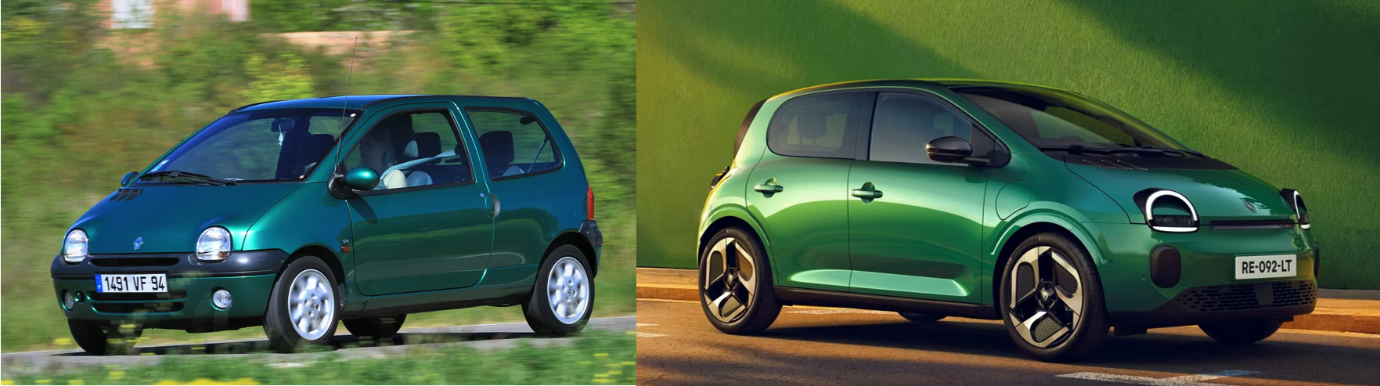
The original Renault Twingo from 1993 and, more than 30 years later, the 2026 electric Renault Twingo
One more thing, in case heritage design is criticised as being lazy because retro is an easy option. Ask which was harder, reinterpreting the original 5 or designing a brand-new car, and de Meo says his design chief, Gilles Vidal, will tell you - the reinterpretation, by a long way, was harder because with an icon you can so easily mess it up...
What's any of this got to do with workplace change?
More than I expected when I started writing this article. Getting a committed petrol car driver into an EV is a change program. You're asking people to give up something they're familiar with for something unfamiliar. In cars the rational case was range, running costs, emissions - that is how many manufacturers tried to get people to change their behaviour and buy a totally different type of car. But in many cases manufacturers have sat back waiting for people's behaviour to change and it hasn't. Emotions don't respond to a business case.
What car makers like Renault have worked out is the part organisations routinely miss. People don't resist the new nearly as much as they mourn the familiar. When I was a teenager, I had more of an emotional attachment to my car than I did to most people. Maybe the new Renault 5 isn't really selling the French a car they remember. It's reminding them of who they were when they bought their first car.
Workplaces live in memory the same way. Mostly it's the people - so many of us made friendships at work that outlasted the jobs themselves - and the office is where those memories physically happened: Friday night drinks, the conversation at the coffee machine that turned into a ten-year habit. The old office held all of that in small anchors. Your own desk, with the photos of family, places you'd been... or in my case, the dream car. Organisations had a meeting room named after an island in the Whitsundays, and we joked for years about starting meetings by reminding everyone of somewhere they'd much rather be. But when that office moved, I'd bet it was the room people wanted to take with them. A silly name on a glass door had become part of who they were at work.
This leads to a question workplace project briefs rarely ask. Not "What are we replacing?" but "What are we carrying with us?" It's harder than it sounds. Working with an organisation's existing identity is the workplace version of reinterpreting the Renault 5: far more difficult than a clean sheet and very easy to mess up.
And you can't carry everything with you - and some things, of course, you shouldn't. Very few workplaces are going back to a desk each and no spreadsheet will make people feel good about that. But the reason people liked a desk was that it was a spot that said, "You belong here," and it was theirs. People still want to feel that. So we have to move that feeling of belonging and ownership up a level. We can give a team a territory they can make their own: photos of the karaoke night. The terrible trophy from some competition in the past. Maybe the Whitsundays meeting room makes a comeback! A space a team has put its mark on stops being somewhere new that people have been moved to. It becomes a place that carries some old memories in - and gives new ones room to grow. And a reason to come to work and spend time with your team.
Renault and Citroën are betting that memory moves people more than statistics. Half a century ago the Renault 5 sold the French freedom. Now it's selling the future, dressed as something they already trust. If your job is getting people to change how they work, there's a lesson in that small car. I'll be watching what the new Renault 5 does in Australian showrooms, with more than professional interest.